

 Shop
Shop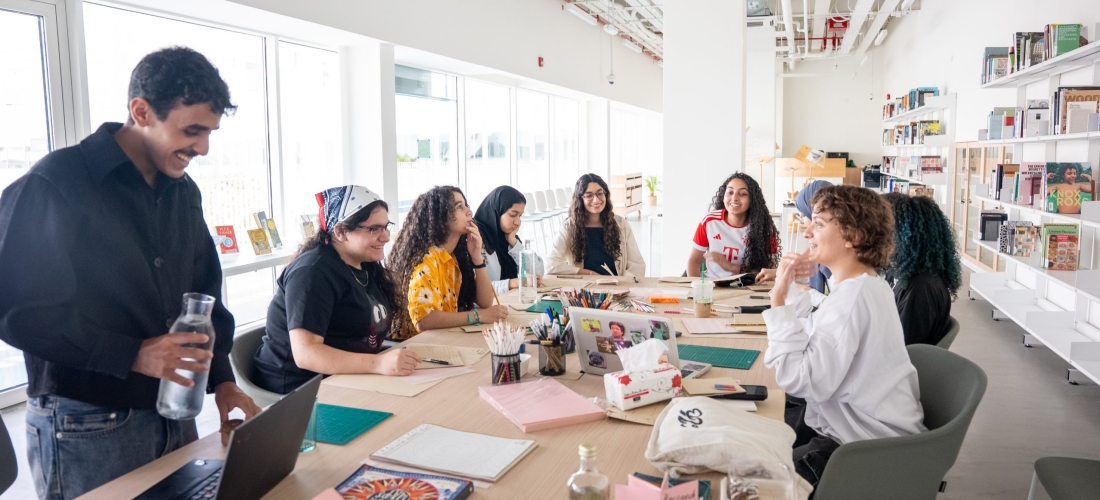
Artist Spotlight: The 2026 Recess Cohort
What happens when seven young artists get total creative freedom? An unforgettable showcase.
This September, Hayy Jameel celebrates the 2026 Recess cohort and their final exhibition, Time Reflected on Water.
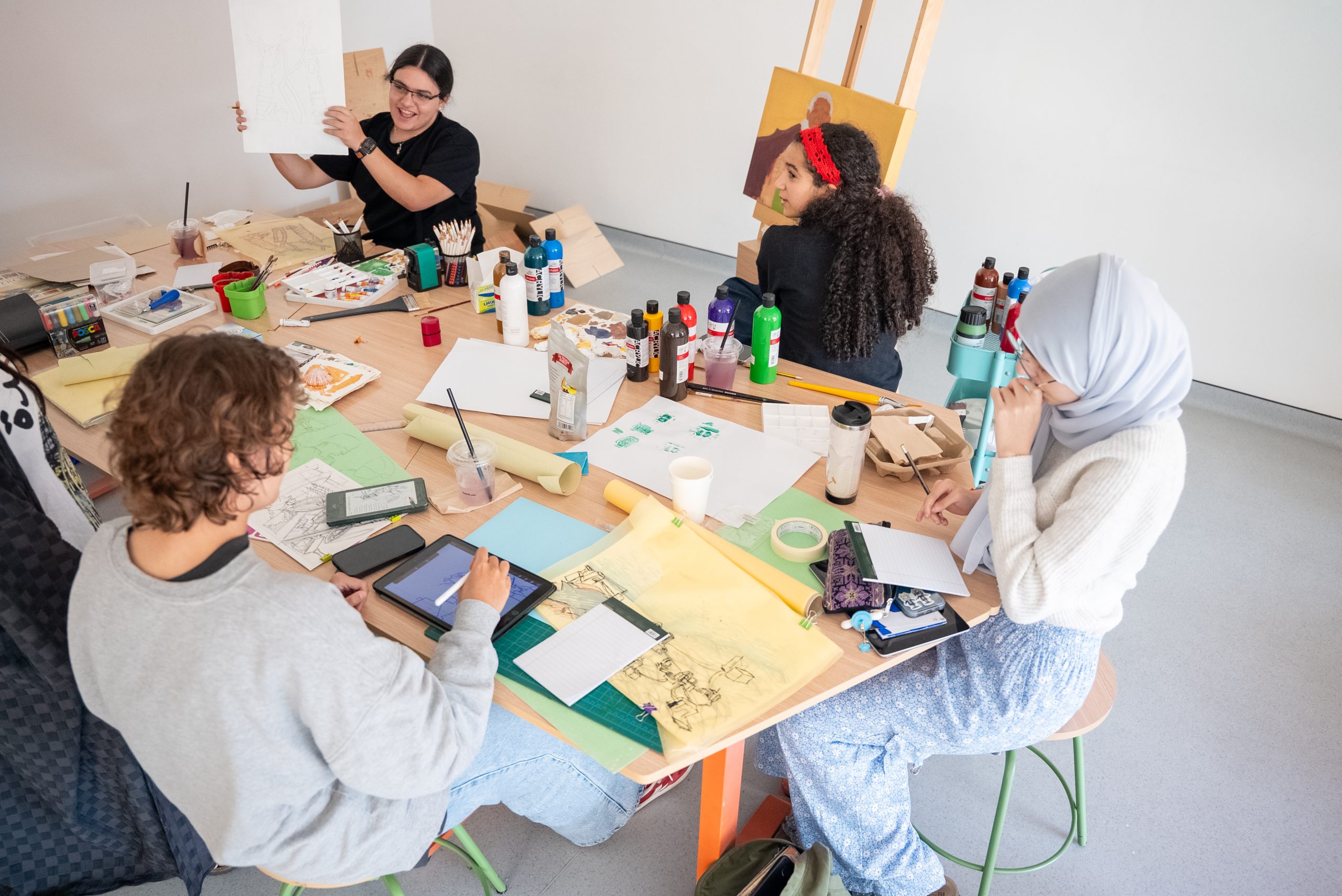
Using the scientific method as a framework for their artistic and philosophical inquiries, the seven students learned to form hypotheses, navigate complex systems of knowledge, and develop their own research practices. Their journey culminates in the showcase Time Reflected on Water, asking what the intersections of past and present reveal to a young generation standing at this pivotal juncture. From late-night studio playlists to messy workspaces covered in pens, wood scraps, and paint, here is how these seven rising stars transformed their ideas into reality.
Personal Identity, Family Archives & Heritage
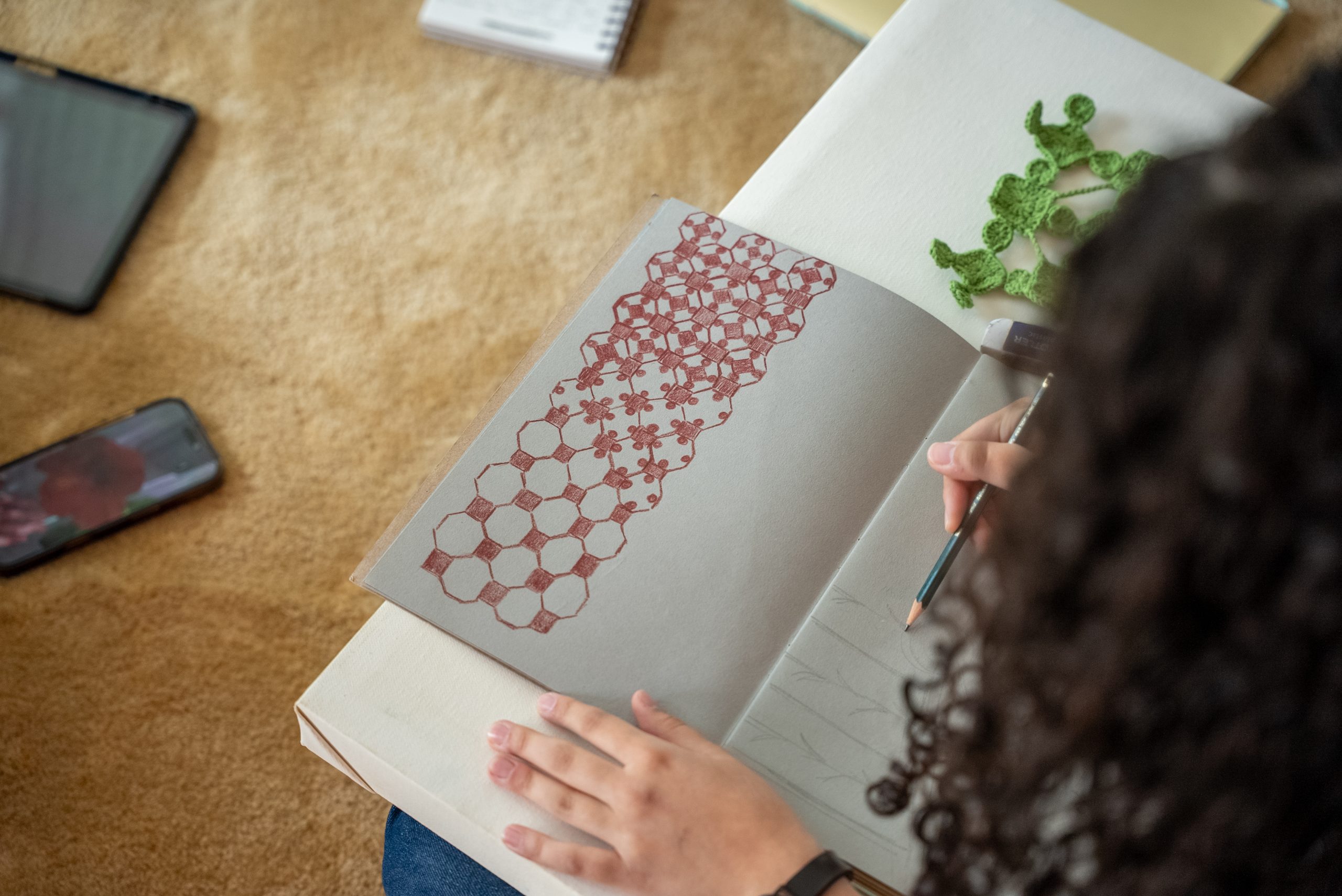
For several members of the cohort, art serves as a bridge between ancestral heritage, geography, and personal identity. Alma Hawwa (16) presents Olive Season, a dramatic visual work emerging from her connection to her Lebanese identity and Palestinian heritage through her grandfather. For Alma, olives and the harvest season carry profound cultural weight. Heavily influenced by her mentor Sahrish from Hayy Learning, Alma gravitates towards paper collage, bold linework, and Posca markers. She views her artistic practice as a tribute to human expression, grounded in her firm belief that the human capacity for creativity deserves to be fully used.
Danah Ziad Alfattani (16) turns personal history into a visual memoir. Her mixed-media installation brings together the first version of herself who lived in Germany and her present self living in Saudi Arabia. Arranging family photographs selected from her mother’s archive alongside collage, painting, and visual symbolism across a table, Danah uses the hibiscus flower to represent beauty, hospitality, and the passage of time. Having regularly passed Hayy Jameel for five years without imagining she would one day exhibit here, Danah embraces the deep state of concentration where her workspace grows productively untidy. When academic demands pull her away from making art for weeks at a time, she stays grounded in her core belief: “Creativity waits. I trust that I can return to it when the time is right, and my style will keep growing.”
Fungi, Deep-Sea Worlds & Architectural Spaces
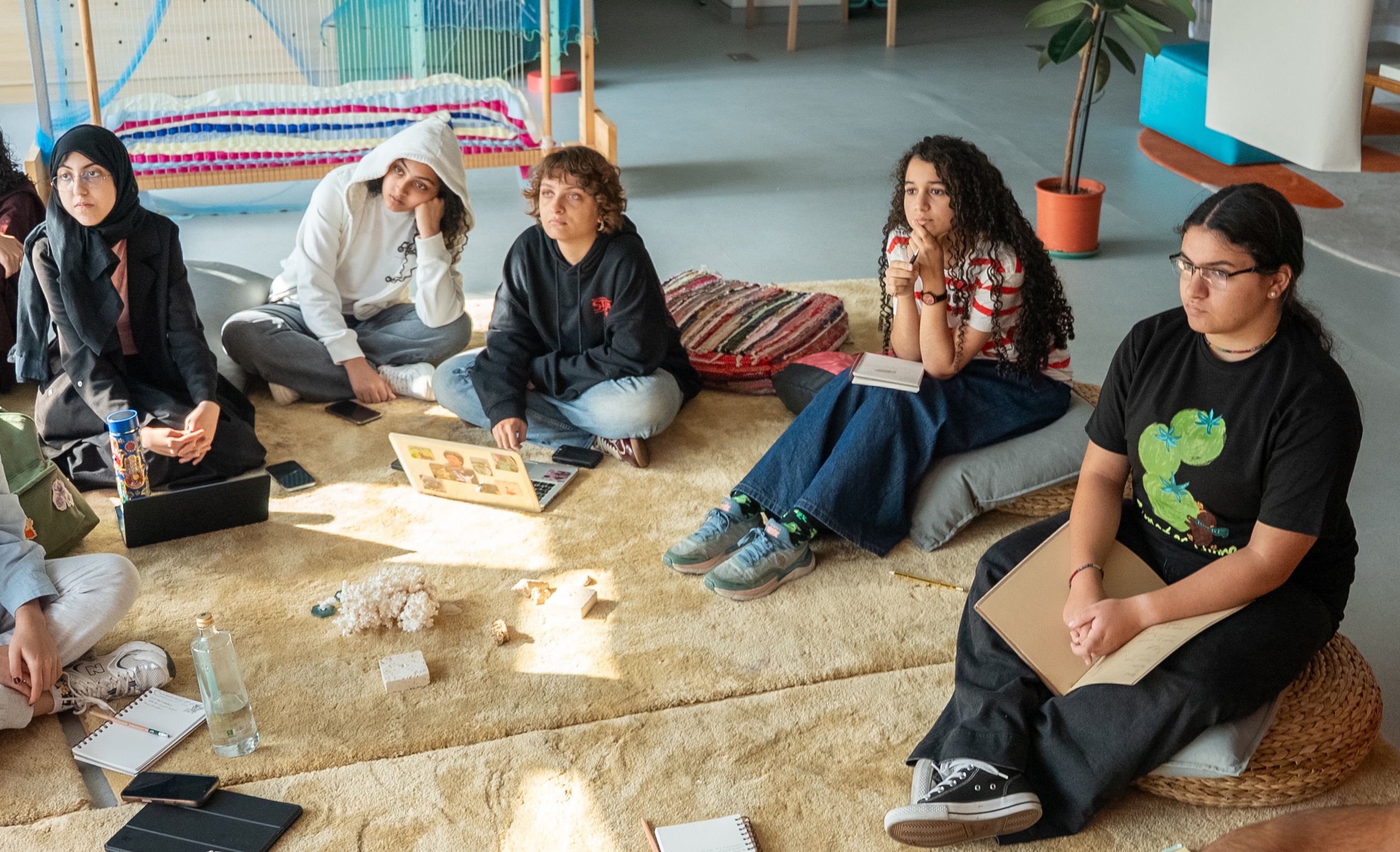
Nature, environment, and spatial theory take center stage through fresh, imaginative angles. Layan Alshakhshir (16) bridges her love for reading, art, and biology—specifically mycology and botany—to explore how historical agricultural practices around the Red Sea influence modern customs. Fascinated by how different cultures assign contrasting meanings to natural forms (like a flower representing innocence in one culture and death in another), Layan conducts deep research that led her to independently publish a 12-page magazine on fungi. For Layan, art provides a vital outlet to express her personality beyond words and build a genuine sense of connection with her audience.
Yasmina Bagader (17) channels her fascination with cultural exchange into a fictional tale about a city hidden beneath the Red Sea. Rather than confining herself to a single aesthetic, Yasmina allows her practice to evolve through distinct phases—moving fluidly from surfing and beach themes to digital graphics and woodworking. Having relied on free software for years, she pushed her tools to their limits during Recess, shaping raw materials into a cohesive world. Her ultimate dream? To work as a creative director, guiding visual identities and shaping scattered ideas into unified, impactful concepts.
Preparing to study architecture at university, Maaria Al Sarraj (18) explores the emotional life inside built spaces. Raised in a creative family by a curator mother and painter grandmother, Maaria grew up surrounded by art, but her passion for architecture solidified at Hayy Jameel after attending a lecture by architect Wael Al Awar. Inspired by Hassan Fathy’s philosophy of space and books on shadow theory, Maaria used the Recess framework to execute her first large-scale painting within a defined timeframe, balancing her exploratory nature with structured methodology.
Tactile Hands, Memory & The Power of the Handmade
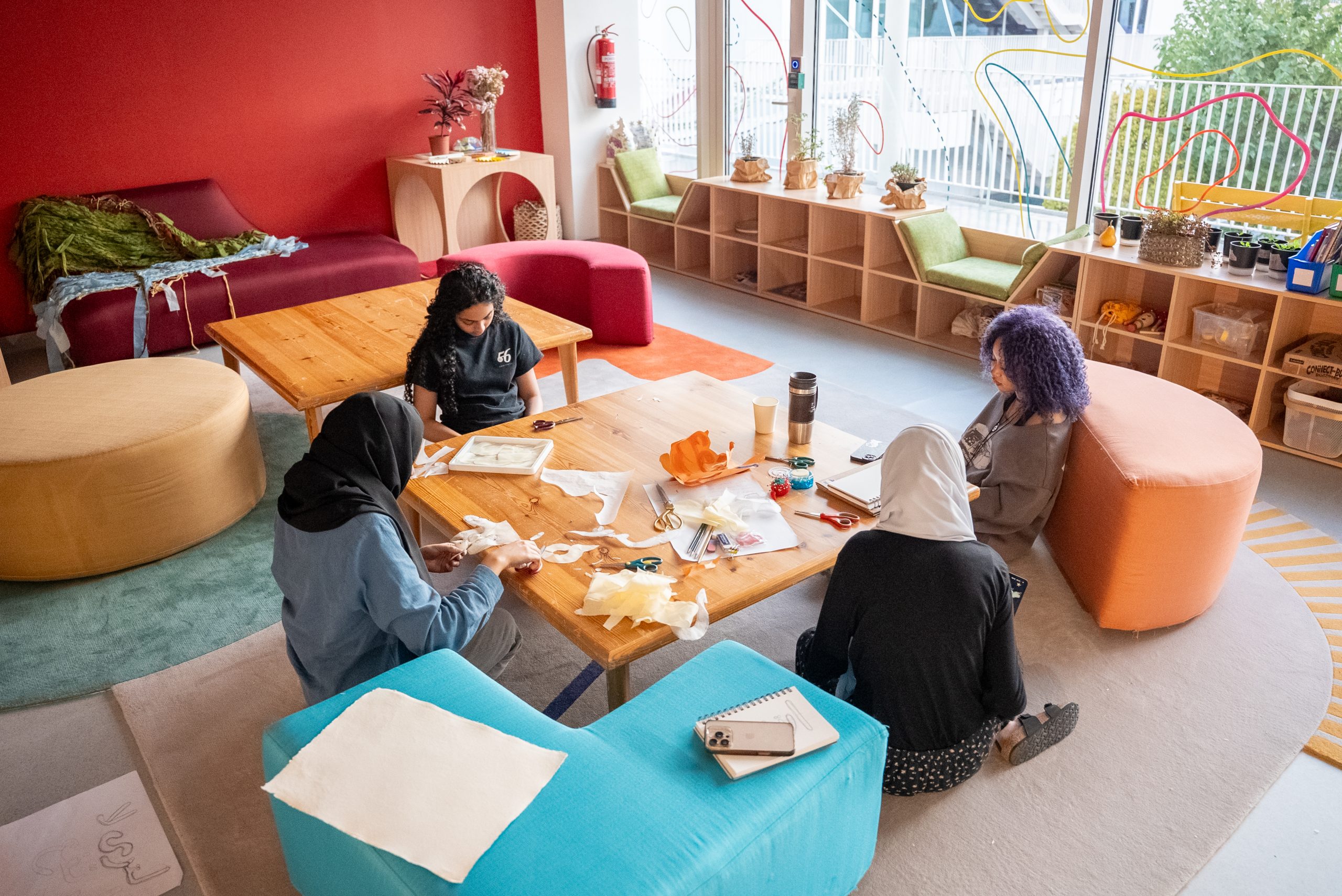
In an era dominated by generative AI and digital screens, the cohort strongly champions the emotional resonance of handmade work. Maaria notes: “The more machine-generated images I encounter, the more strongly I feel that creative work should carry the presence, supervision, and choices of its maker.”
Nour Ibrahim (17) echoes this belief through a mixed-media installation combining a painting, sculpted hands, and crocheted elements. Her work traces back to a vivid childhood memory of her grandmother trying to teach her to crochet at age seven. Though Nour found it difficult at the time and gave up, the warmth of that shared moment stayed with her, inspiring her to explore handmade objects as tools for human connection. Drawn to problem-solving and observational sketching, Nour creates characters and documents everyday moments, aiming to become an authentic storyteller across multiple media.
Visualizing Moods & Letting Go of Pressure
Zahra Kaki (16) turns her canvas inward to map out complex emotional states and states of mind. Her series of three paintings visualizes emotional fluctuation and chaos, the isolation of feeling out of place, and the internal realities of body dysmorphia. Introduced to painting early on by her mother, Zahra works with acrylics, pencils, and pens. Recess helped her transition from viewing art as a simple childhood hobby to developing an academic understanding of color theory, sound, and visual interpretation.
Both Zahra and Nour offer vital advice for aspiring young creators fearing the blank page: release yourself from unrealistic expectations. Nour emphasizes that constantly comparing yourself to others drains the joy from the process, reminding us that everyone develops at their own pace.
Real Connection in the Studio
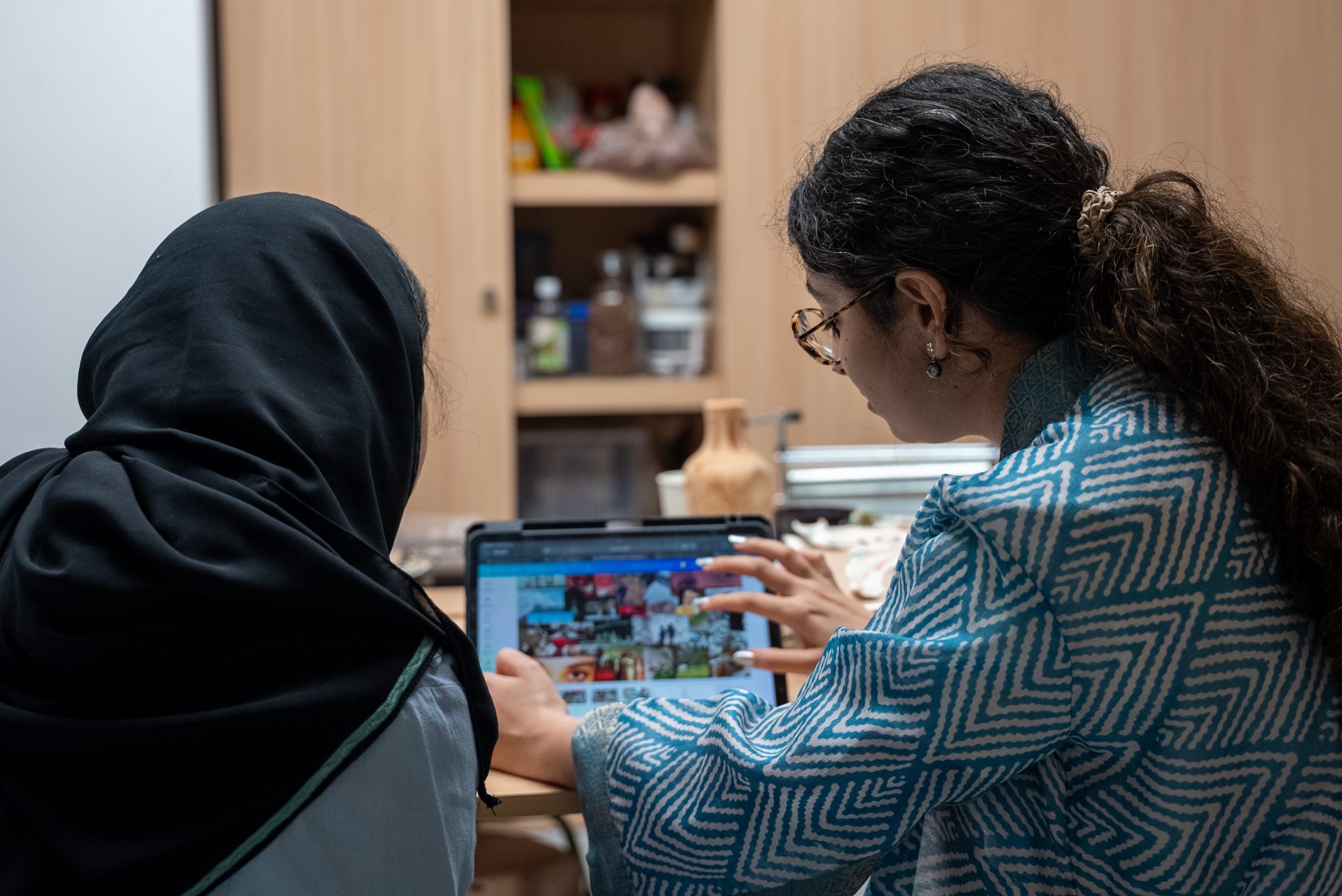
Across the entire cohort, the physical studio environment at Hayy Jameel proved to be the ultimate game-changer. Moving past online tutorials and virtual resources, the artists found deep value in working alongside peers, engaging in sharp philosophical debates, and receiving constructive guidance from artist-teachers. For Zahra, Recess gave her a reason to jump out of bed every morning; for Alma, learning through trial and error within a supportive community was irreplaceable.
Visit Time Reflected on Water at Hayy Explorers (on view until October 3, 2026) to experience the depth, curiosity, and authentic storytelling of the 2026 Recess cohort!