

 Shop
Shop
Join the Jameel Library for a wide range of programmes led by community members this August! You could also pitch your own programme here.
Reading Circle: Girls of Riyadh and the Politics of Cringe with Daliah Qadi and Nouf AlHarthi
7-8:30pm
August 5, 2026
What does the novel Girls of Riyadh (2005) reveal when it’s read nearly twenty years after its publication, not simply as a controversial novel, but through the feelings it continues to provoke?
As part of the Jameel Library’s Summer Reading Challenge, join Daliah Qadi and Nouf AlHarthi for a reading circle exploring Girls of Riyadh through the politics of affect: liking, disliking, embarrassment, attachment, refusal, and what is now might be described as “cringe”. Together, the participants consider how these responses open up new ways of reading the novel and its enduring questions around love, desire, gender, intimacy, and public culture.
Participants are expected to have read the novel in advance as the session will begin directly with discussion.
RSVP here.
About
Daliah Qadi is a multidisciplinary artist whose practice moves across writing, painting, photography, and calligraphy. With a background in graphic design and traditional arts, her work explores questions of memory, representation, and cultural narratives through research-led artistic practice. She is interested in how texts, images, and objects accumulate meaning over time and through interpretation. Her work has been exhibited at the FREEZE Lexus Photography Exhibition (2019), the Young Saudi Artists (YSA) Calligraphy Edition (2021), and the Al-Balad Art Residency end-of-year exhibition (2022).
Nouf AlHarthi is a writer and researcher with training in social anthropology from SOAS, University of London. Her MA dissertation, After teasing and play love becomes true: an ethnography of love and listening in Khaleeji songs, examines how love is expressed, understood, and negotiated through Khaleeji popular music, with particular attention to listening practices, lyrical language, and the social and political life of song in the Gulf.
Jameel Library Monthly Writing Circle!
4-6pm
August 7, 2026
Writing is often approached as a solitary act. However, magic unfolds when treated as a participatory process. The writing circle at the Jameel Library invites writers and word lovers to gather around language collectively: to write alongside one another, exchange feedback, experiment with forms, and reflect on how stories are shaped through conversation.
Through guided-prompts, discussions, and focused moments of writing, the circle will guide you to develop your writing collaboratively rather than being perfected individually.
Whether you are beginning a new practice or returning to familiar words, you are invited to join a growing dialogue!
RSVP here.
Aldhuwaini short film discussion with Ali Alabyadh, Laila Shaaban, and Ahmed A. Alsaggaf
7-8:30pm
August 10, 2026
Join three marine scientists for a discussion of Aldhuwaini, a short film documenting the Hareed Fish Festival in Jazan. Blending scientific research with storytelling, the film explores the festival’s ecological and cultural significance, as well as the long relationship between coastal communities and the Red Sea. The conversation considers how knowledge is built through observation and care, rather than treated as something to be extracted.
RSVP here.
About
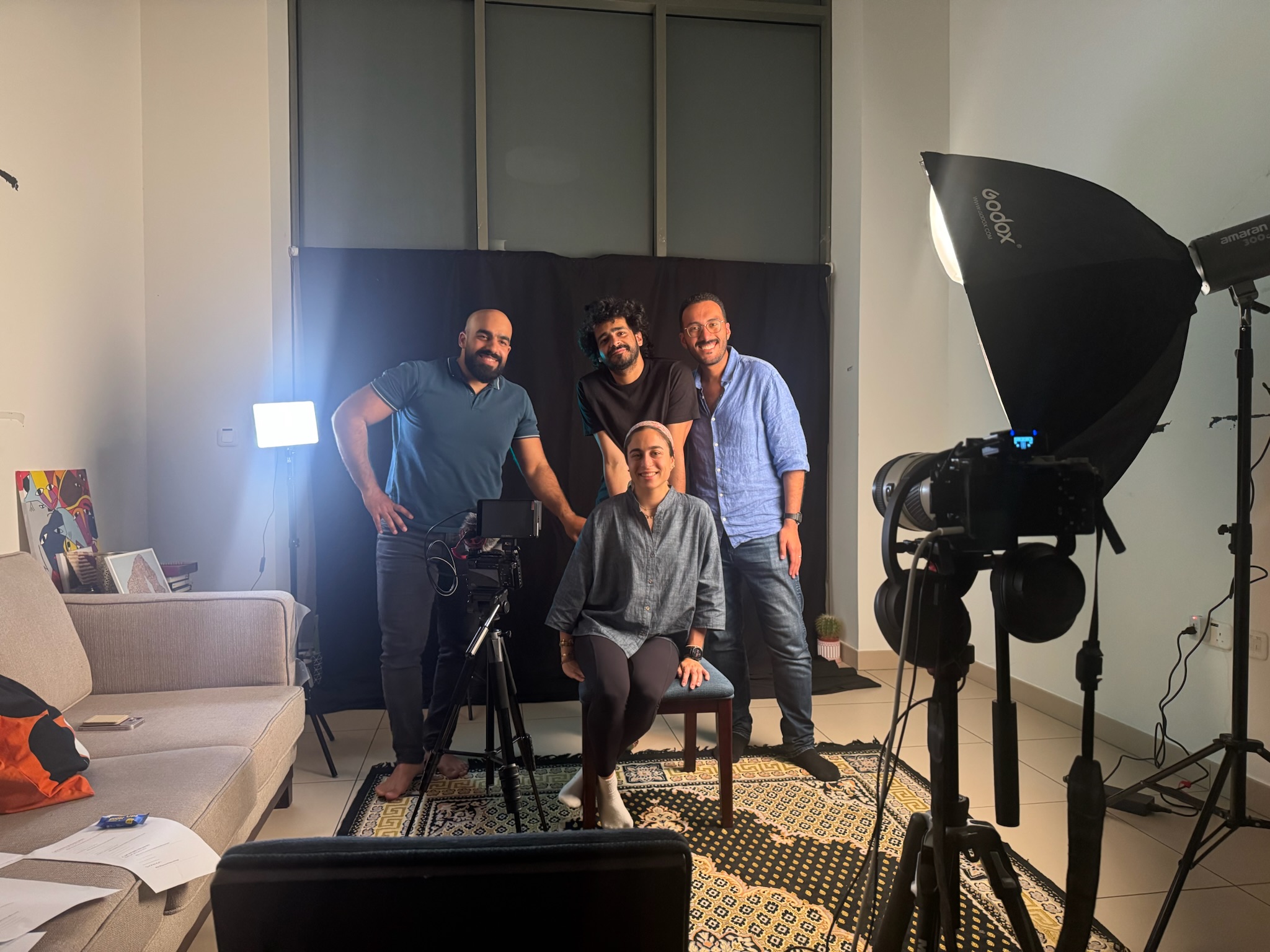
Ali Alabyadh is a marine scientist and filmmaker whose work explores the connections between people, culture, and the sea. Growing up on a small island in the Arabian Gulf shaped his fascination with coastal life and the stories carried by marine landscapes. Through documentary filmmaking, he combines scientific curiosity with visual storytelling to document traditions and marine environments across Saudi Arabia and beyond. His films often focus on overlooked stories that reveal how culture, memory, and nature are deeply intertwined.
Raised on the shores of the Red Sea, Laila Shaaban is a marine scientist guided by the questions this changing body of water has spurred. She has been trained on the coast of California, studying seagrass ecology, in New York , where she worked on oyster restoration, and at the NASA office, where she studied how sea surface temperatures in the Indian Ocean can be modeled. Laila is now at KAUST pursuing a doctorate in marine science, focusing on how climate change will impact coral reef ecosystems. Her work has been driven by a desire to bridge science and communities and has focused on education, science-driven restoration planning, and conservation.
Ahmed Alsaggaf is a marine scientist at KAUST whose research explores the hidden microbial life that underpins ocean ecosystems. Deeply connected to the Red Sea, he is interested in the relationships between marine environments, the organisms that inhabit them, and the coastal communities that both shape and depend on these ecosystems. Through this project, Ahmed and his colleagues draw on their scientific expertise to explore the annual cultural phenomenon of the Hareed Festival in the Farasan Islands, highlighting the importance of safeguarding both this unique tradition and the marine environment that sustains it.
