

 Shop
Shop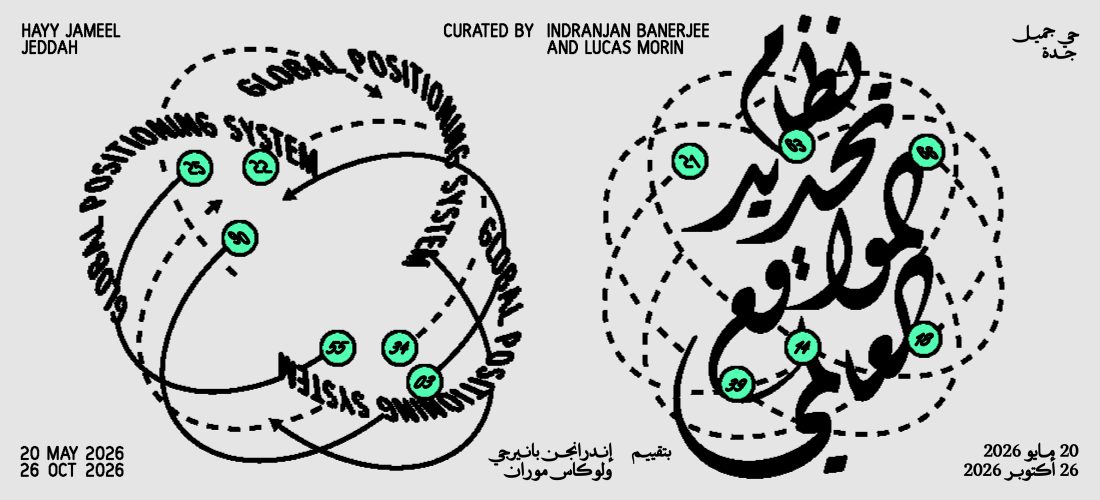
Opening May 20, 2026, ‘Global Positioning System’ is an upcoming exhibition curated by Indranjan Banerjee and Lucas Morin.
Global Positioning System is an exhibition dedicated to mapping and navigation systems. It tells stories of fast cars and slow trains, street barriers and trembling grounds, warping highways and broken bridges. Gathering over forty artists across Art Jameel’s two centres in Jeddah and Dubai, the exhibition presents a wide range of artistic practices—from research-based engagements with infrastructure projects to conceptual works that question the very perception of distance.
Maps, remaining the dominant representation space, carry a heavy weight. Far from reflecting geography objectively, they are instruments of power that embody specific worldviews. Though based on mapping, navigation systems like GPS render traditional maps redundant; they reduce navigation to an abstract exercise and remove the need to comprehend the physical space one moves through. This exhibition’s central provocation is to steer away from the map’s imposing presence, asking what remains of space and movement in its absence.
Focusing on movement, conceptual gestures and time-based practices, ‘Global Positioning System’ approaches navigation with friction, interruption and uncertainty. Navigation situates bodies and calibrates speed across shifting coordinates. When these systems fail, they produce aberrations and standstills ranging from minor inconvenience to profound catastrophe. Yet, failure can also offer protection, providing opaque camouflage against all-seeing technologies and creating generative zones of illegibility and evasion.
Set against contested topographies and simulated landscapes, the exhibition engages with the infrastructure of mobility that enables transport and trade, questioning the promises of speed and progress. It questions home and its coordinates, landscapes in transformation, and what navigation means when the destination is not a place but a recollection. Before routes are built, they are projected; before territories are fixed, they are narrated. ‘Global Positioning System’ engages these imaginaries, suggesting that orientation is as much about traversing as it is composing new worlds.
Global Positioning System is an exhibition in two parts, across Art Jameel’s two venues:
Hayy Jameel, Jeddah – May 20 to October 26, 2026 With works by Bani Abidi, Mahmoud Alhaj, Heba Y. Amin, Ana Amorim, Eissa Attar, Muhanned Cader, Cheng Xinhao, Md Fazla Rabbi Fatiq, Mona Hatoum, Baaraan Ijlal, Karachi LaJamia, Nalini Malani, Cinthia Marcelle, Ahmet Öğüt, Amol K Patil, Fazal Rizvi, Hiraki Sawa, Vishwa Shroff, Arpita Singh, Tiger Tateishi, Hitesh Vaidya, Zarina.
Jameel Arts Centre, Dubai – May 9 to October 4, 2026
With works by Bani Abidi, Madiha Aijaz, Fatma Al Ali, Mahmoud Alhaj, Lulua Alyahya, Ana Amorim, Nazgol Ansarinia, Fayçal Baghriche, Mirna Bamieh, Heman Chong, Angela Detanico & Rafael Lain, Harun Farocki, Md Fazla Rabbi Fatiq, Devadeep Gupta, Hylozoic/Desires, Mohammed Kazem, Lawrence Lek, Dora Longo Bahia, Cinthia Marcelle, Seher Naveed, Şener Özmen & Erkan Özgen, Fazal Rizvi, Hassan Sharif, Vishwa Shroff, Dima Srouji, Do Ho Suh, T. Vinoja, Subas Tamang, Bo Wang, Tatyana Zambrano.
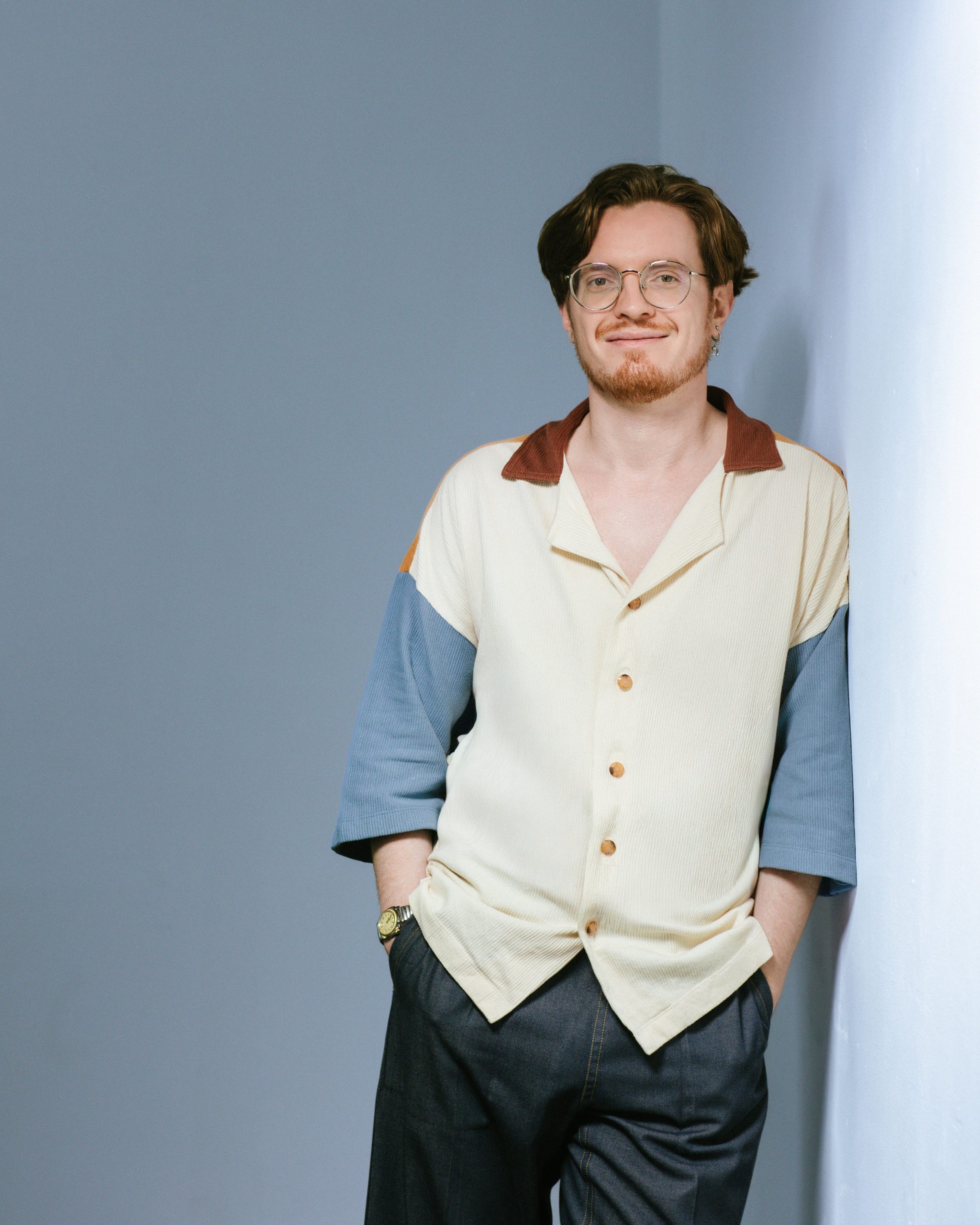
Photography by Daryll Borja of Seeing Things Studio.
Lucas Morin is Senior Curator at Art Jameel. His work engages with animals, infrastructure, cities and the politics of emotions. He was previously curator at Bétonsalon — Centre for Art and Research (Paris) and worked at the Sursock Museum (Beirut). He graduated from Sciences Po Paris and Paris-Sorbonne University in Philosophy and Social Sciences. He loves books, cats and public transportation systems.
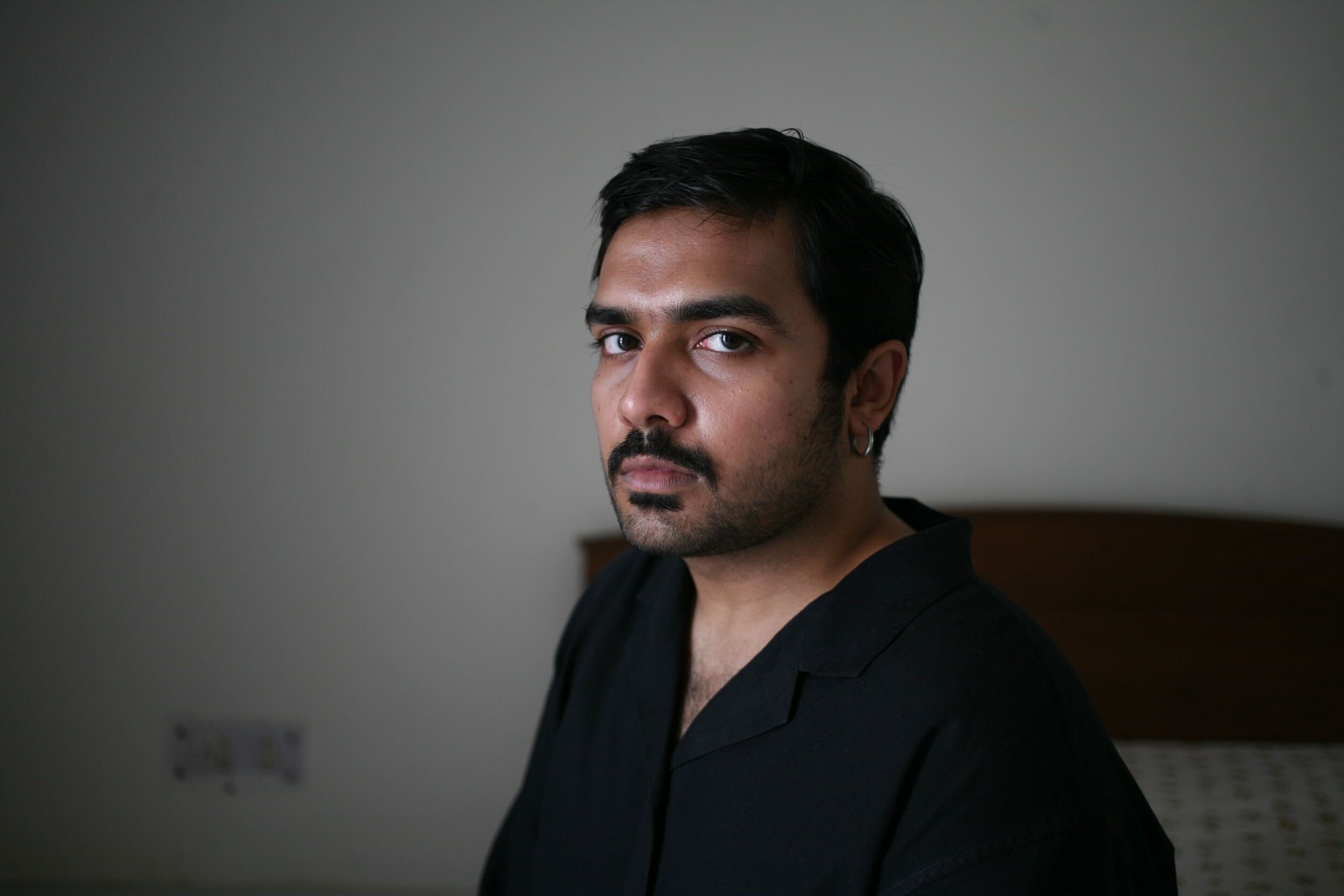
Indranjan Banerjee is the Curator at Art Jameel, Dubai. He was previously the Senior Curator at Khoj International Artists’ Association, New Delhi. As a curator, writer and cultural producer he often thinks with research based practices that are at the intersection of visual, material and performance cultures. His curatorial research is in the realm of ecology, technology, the body and speculative narratives, which informs his artistic research as well. Experiments in writing, writing in transmission and acts of annotation are his writerly fixations.
