

 Shop
Shop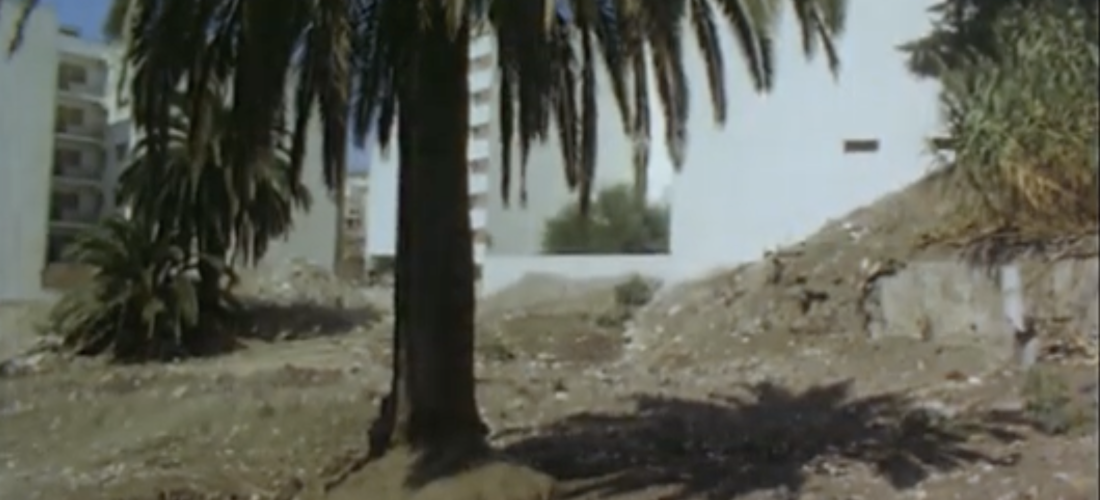
The video art programme is an attempt to introduce video art to those interested in understanding the techniques and styles that emerged in the twentieth century. It unfolds across two main screenings, as well as a special segment dedicated to a Saudi video artist to be announced later this year.
The programme is accompanied by a talk and conversation, creating space to reflect on the specific trajectories of video art in Saudi Arabia, the region, and the world.
The first screening on April 10 brings together works by international artists from the 1940s to the 1960s, offering an overview of experimental approaches to film and video, ranging from performative interventions to technical innovations. The second, on April 11, focuses on the Arab region, presenting how artists have engaged with the medium to express aspirations, reflect on their environments, and grapple with the societal contexts they inhabit.
10th of April
Norman McLaren — Neighbours (1952)
Silent animation.Language: None.
Subtitles: None.
Duration: 8 min.
Synopsis: In this iconic pixilation animation, two neighbors’ friendly coexistence dissolves into violent conflict over a single flower. A darkly comic anti-war parable, the film uses stop-motion and live-action hybrid techniques to transform human bodies into puppet-like machines.
Biography: Norman McLaren (1914–1987) was a pioneering Scottish Canadian animator and filmmaker. Known for his innovative techniques—including direct animation on film, pixilation, and optical sound—he produced over sixty films at the National Film Board of Canada, earning an Academy Award and global recognition for experimental animation.
Maya Deren — Meshes of the Afternoon (1943)
Silent Short film.
Language: None.
Subtitles: None.
Duration:14 min.
Synopsis: This surreal psychodrama follows a woman spiraling through dreamlike repetitions as she chases and becomes haunted by a cloaked figure with a mirror face. Deren’s radical use of subjective camera, symbolic imagery, and temporal loops redefined cinematic narrative and visual language.
Biography: Maya Deren (1917–1961) was a Ukrainian-born American filmmaker, dancer, and theorist, often called the “mother of American avant-garde cinema.” Her films fused dance, myth, and psychological symbolism, profoundly influencing generations of experimental filmmakers.
Marie Menken — Lights (1966)
Silent Short film.
Language: None.
Subtitles: None.
Duration: 6 min.
Synopsis: A dazzling abstract film capturing flickering city lights through rapid handheld camerawork. Menken’s kinetic, gestural shooting style transforms urban neon into a visual symphony of rhythm and color, evoking both modernity’s energy and its frenetic dislocation.
Biography: Marie Menken (1909–1970) was an American experimental filmmaker and painter. Known for her “camera-as-brush” technique, she was a major figure in the New York avant-garde scene and an influence on filmmakers such as Stan Brakhage and Andy Warhol.
Harry Smith — Early Abstractions #1–5 (1946–50),
Silent Short film.
Language: None.
Subtitles: None.
Duration: 20 min.
Synopsis: This series of hand-painted animations pulses with vibrant colors and shifting geometric forms, often set to jazz and classical music. Smith’s films merge mystical symbolism with the frenetic energy of mid-century urban life, creating hypnotic visual music.
Biography: Harry Smith (1923–1991) was an American artist, filmmaker, ethnomusicologist, and occultist. A key figure in Beat-era New York, he was known for his experimental animations and his monumental Anthology of American Folk Music, a pivotal influence on the folk revival.
Fernand Léger & Dudley Murphy — Ballet Mécanique (1924)
Silent Short film.
Language: None. Subtitles: None.
Duration: 16 min.
Synopsis: One of the most famous works of early avant-garde cinema, this film assembles rapid montages of machine parts, human figures, and geometric objects in a rhythmic visual “ballet.” Both celebration and critique, it reflects the modernist fascination—and unease—with the machine age.
Biographies: Fernand Léger (1881–1955) was a French painter and filmmaker associated with Cubism and modernist abstraction. Dudley Murphy (1897–1968) was an American filmmaker who collaborated with avant-garde artists and musicians. Ballet Mécanique is their most significant collaboration, blending art and cinema into an industrial spectacle.
Lawrence Jordan — Hamfat Asar (1965)
Silent Short film.
Language: None.
Subtitles: None.
Duration: 9 min.
Synopsis: Jordan’s surreal cut-out animation assembles Victorian engravings, cosmic imagery, and bizarre juxtapositions into a stream-of-consciousness visual poem. The film moves with a whimsical but unsettling rhythm, hinting at hidden narratives and dreamlike logic.
Biography: Lawrence Jordan (b. 1934) is an American experimental filmmaker renowned for his collage animation. A close associate of the Beat Generation, his films merge surrealist imagery with cosmic and mystical themes, establishing him as a central figure in American avant-garde cinema.
11th of April
Harbor
Yto Barrada — Beau Geste (2009)
Language: English Subtitles: None.
Duration: 3min 55sec.
Synopsis: A lone man tends an ailing palm tree growing in a vacant urban lot in Tangier. His seemingly simple act conceals a subversive gesture: preserving the tree ensures the plot cannot legally be developed. Barrada’s quiet film intertwines ecological care with a critique of urban speculation and state power over land.
Biography: Yto Barrada (b. 1971) is a Moroccan artist working in photography, film, sculpture, and installation. Her practice frequently addresses urban transformation, ecological fragility, and socio-political narratives in Morocco and the Mediterranean. She has exhibited at MoMA, Tate Modern, and the Venice Biennale.
Jumana Emil Abboud — The Diver (2004)
Language: English.
Subtitles: None.
Duration: 4min 49sec.
Synopsis: In a spare and poetic visual language, Abboud performs simple gestures near water, evoking personal memory, longing, and the fluid borders between land, identity, and belonging. The piece layers environmental imagery with the psychological landscape of exile and displacement.
Biography: Jumana Emil Abboud (b. 1971) is a Palestinian artist based in Jerusalem. Her interdisciplinary work engages drawing, video, performance, and storytelling, exploring themes of folklore, place, water, and the traces of cultural memory in Palestinian landscapes.
Adel Abidin — Memorial (2009)
Silent Animated short film.
Language: None- silent.
Subtitles: None.
Duration: 3min 35sec.
Synopsis: A stranded cow stands alone in an abstract, shifting digital landscape. Alternately vulnerable and monumental, the creature becomes a metaphor for innocence trapped amid technological and environmental upheaval. The film blends absurdity with poignant critique of alienation and ecological dislocation.
Biography: Adel Abidin (b. 1973) is an Iraqi-Finnish visual artist working across video, installation, and photography. Known for blending dark humor with political critique, his art explores themes of cultural identity, war, consumerism, and social absurdity. He has represented Iraq at the Venice Biennale and exhibited worldwide.
Heba Y. Amin — As Birds Flying (2016)
Language: Arabic.
Subtitles: English.
Duration: 7min 11sec.
Synopsis: An allegorical short film constructed from leaked drone footage and fabricated audio, reimagining the detached conversations of unseen operators surveying Gaza from above. Amin critiques the supposed neutrality of aerial perspectives and exposes how surveillance technologies inscribe ideological narratives onto landscapes.
Biography:
Heba Y. Amin (b. 1980) is an Egyptian visual artist, researcher, and educator. Her multimedia practice explores technology, architecture, and the geopolitical implications of landscape and infrastructure. Amin has exhibited internationally at institutions including the Mosaic Rooms, Frankfurter Kunstverein, and the Berlin Biennale.
Oraib Toukan — When Things Occur (2016)
Language: Arabic.
Subtitles: English.
Duration: 28min.
Synopsis: The film reflects on mediated witnessing in moments of violence, drawing from Skype conversations with Palestinian photographers, fixers, and drivers in Gaza whose images circulated globally during the 2014 assault. Through still images, screen-based interviews, and pauses that foreground the act of looking, Toukan investigates how grief is visualized, transmitted, and consumed, asking what it means to see from a distance and how images become vessels for both testimony and abstraction.
Biography: Oraib Toukan is a Jordanian-Palestinian artist and scholar whose work spans video, photography, and writing. Her practice examines the politics of image-making, spectatorship, and representation under conditions of conflict and displacement. Toukan’s works have been exhibited internationally, including at Tate Modern, New Museum, HKW Berlin, and the Sharjah Biennial.
