Shop
ShopArtist Spotlight: Ceramicist Pharah Al-Ghalib
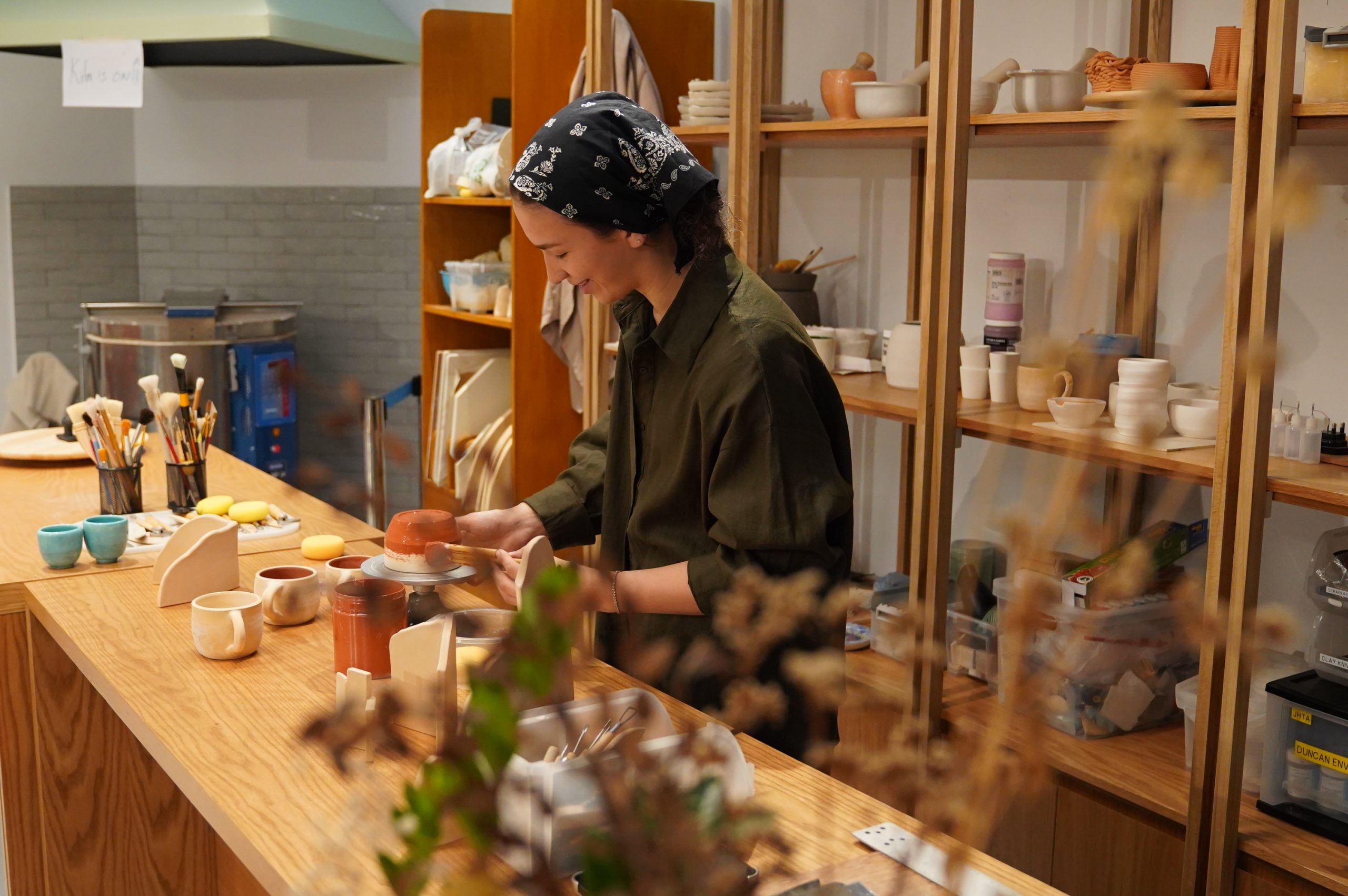
Pharah Al-Ghalib is a ceramic artist and visual artist whose practice centres on exploring form, material, and space through clay.
Her passion for ceramics began while pursuing her Bachelor’s degree in Visual Arts at the American University in Dubai. Her first experience with clay was creating plaster moulds for slip casting, which naturally led her to work on the pottery wheel. Since then, her relationship with clay has transformed into a deep commitment to the medium. As she notes: “I came to ceramics somewhat unexpectedly while pursuing product design, but the passion it sparked was immediate and undeniable”
What started as experimentation soon became a defining direction in her practice, to the point that she chose it as her primary medium for every semester during her studies.
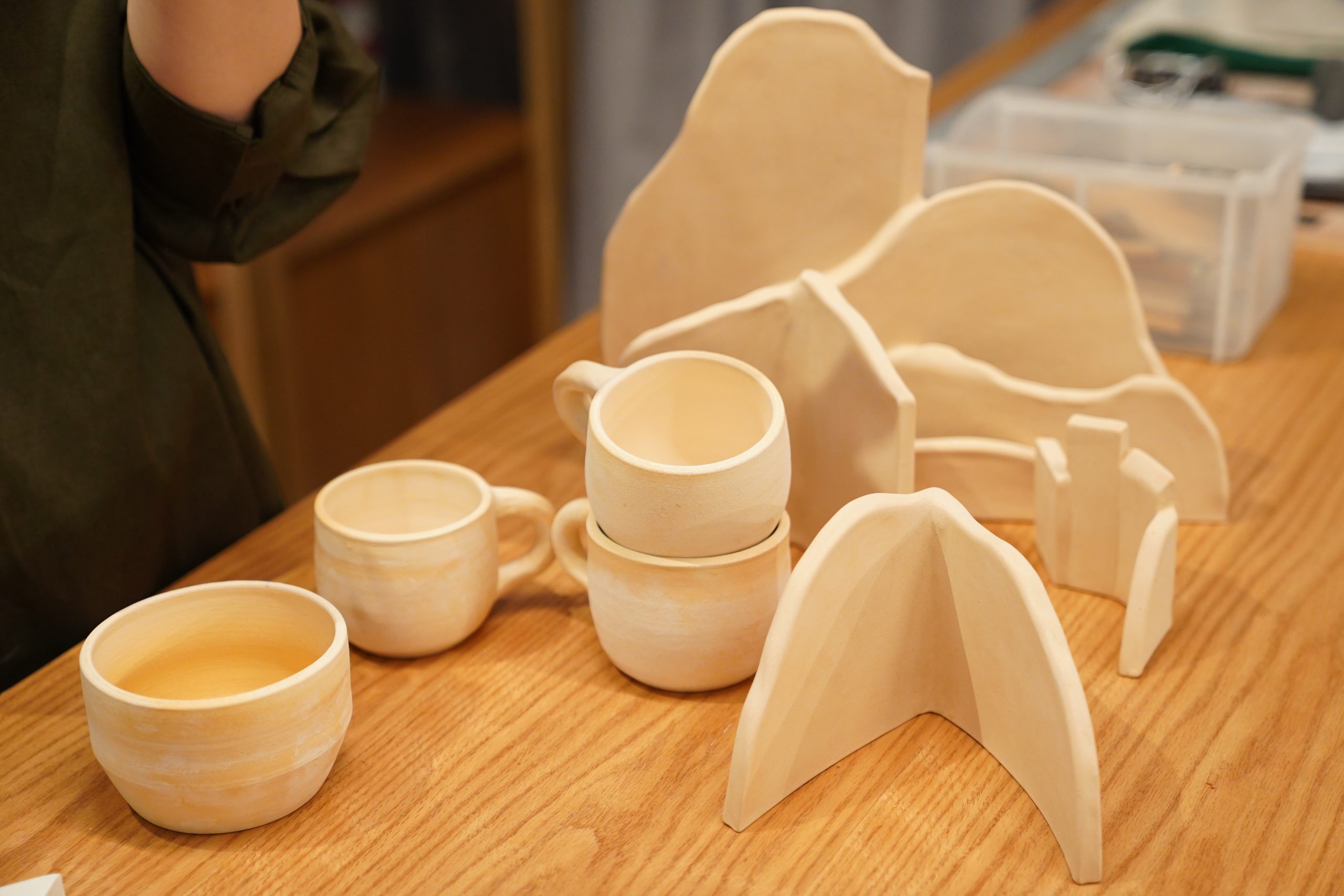
For Pharah, working with clay has been an instinctive process from the beginning. Despite the simplicity of the material, its malleability and tactile nature hold immense potential for her. Moving between intuitive hand-building and precise wheel throwing, she found herself striving for a quiet clarity that allows each piece to speak with as little visual noise as possible.
This is how her artistic style in ceramics began to take shape; however, she views defining her style as an evolving process, the result of an increasing awareness of how deeply our sense of taste is shaped by our surroundings, both consciously and unconsciously. This process begins with unlearning preconceived ideas of what is considered “tasteful” and instead following what genuinely resonates, grounded in patience, experimentation, and trust.
For her inspiration is found everywhere, especially in nature,from the shifting rhythms of waves and the intricacy of seashells to the gradients of mountainous landscapes, and reflecting on how these landscapes evolve over time. She is also drawn to the visual rhythms found in Impressionism, Abstract Expressionism, and traditional Chinese and Japanese landscape painting.
Additionally, she highlights an interest in contemporary artists such as Lachlan Turczan and Muhannad Shono, whose works are characterised by the ability to create immersive, dreamlike, and meditative environments.
Through her Bachelor’s thesis, which explored the sociological history of Al-Balad (Historic Jeddah) through its architecture, she developed a deep fascination with space and its influence on how we live. She observed how the architecture of the historic city reflected the landscape of Jeddah, that urban space situated between the Hejaz mountains and the Red Sea.
Recently, she has also been reflecting on her personal history and family lineage, expressing these themes through the structure and form of her pieces in a unique narrative.
When asked about her favourite part of Hayy Jameel, her answer was heartwarming: the people, During her time at Hayy Studios, she had the opportunity to step outside her own studio environment and work alongside a diverse group of creatives. Through sharing ideas and conversations, the creative community became an essential part of her practice.
She described the Hayy Jameel team as a “supportive village” for her practice, offering support, motivation, and thoughtful critique that continually refreshes her perspective.
Regarding her experience with Hayy Makers, she replied: “Hayy Makers has felt like a long-held dream realised” Being in a multidisciplinary space rooted in collaboration and exchange brought back what she had missed from her university days, an environment where everyone is immersed in their own projects, yet they learn from one another in a shared space dominated by a sense of collective creativity.
Her advice to emerging artists is summarised in allowing oneself to make “bad” work; growth comes only through persistence and practice to reach something meaningful.
When asked about her future projects, she shared that she is currently developing a series of hand-built ceramic sculptures inspired by Jeddah’s landscape, incorporating her aforementioned artistic style with a minimalistic yet encompassing approach to nature. She anticipates continuing this line of inquiry while also experimenting with alternative ceramic firing techniques in future projects